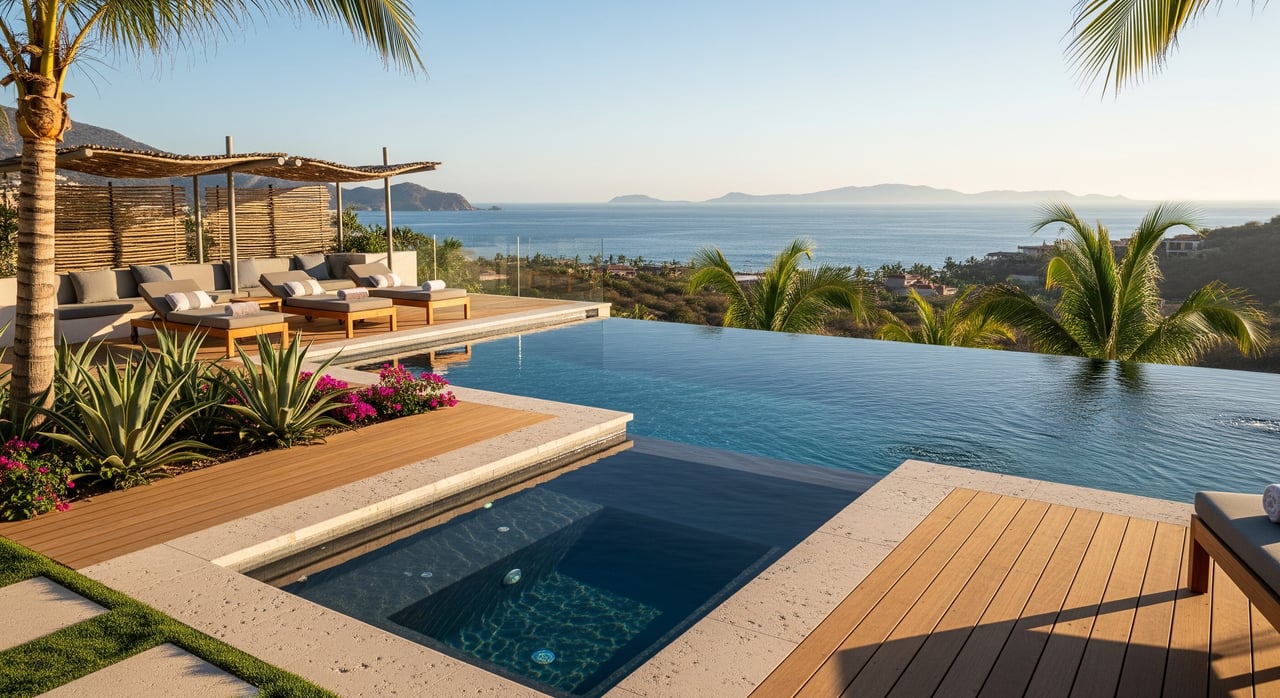
Dreaming of a pool that melts into the Pacific while staying easy to own? In Punta Mita, wind, salt air and strong sun shape every design decision, from the edge detail to the grout. You want a showpiece that photographs beautifully and performs day after day. This guide walks you through siting, water treatment, materials and lighting so your infinity or plunge pool looks stunning and lasts. Let’s dive in.
Why Punta Mita pools differ
Punta Mita sits on a tropical Pacific coastline with warm temperatures, high humidity and persistent sea breezes. According to regional guidance from NOAA, the area also sees a seasonal hurricane period, which brings high winds and driving rain. That mix means faster evaporation, more chemical loss and higher exposure to storm conditions. The result is simple. Design choices that work inland need upgrades here.
Climate and coastal exposure
Salt-laden air and occasional sea spray can speed up corrosion on metals and fixtures. Industry guidance from AMPP highlights how marine environments accelerate staining, grout deterioration and hardware wear. Warm water and humidity also encourage algae growth, which raises the bar for routine maintenance. Plan for stronger materials, protective measures and smart operations from the start.
Site for views, sun and wind
Orient for horizon scenes
Set your primary edge to frame the Pacific and your favorite sunrise or sunset moments. Balance that view with how the sun moves over decks and lounges. You can capture softer morning or evening light, then add shade for midday comfort. On rooftops or cliffside terraces, confirm structural coordination and leave service access for pumps and chemical controls.
Tame wind at the edge
Wind can blow water off an infinity sheet, spike evaporation and stress your catch basin. You can add a larger surge tank or basin, and fine-tune flow with adjustable weirs or variable-speed pumps. Low glass or planted windbreaks protect the edge without blocking the view. On exposed sites, design teams often use wind studies or seasonal observation to set weir height and basin sizing.
Infinity edge design essentials
Infinity edges need more surge capacity in Punta Mita than you might expect. Wind-driven overspill is energetic and intermittent, so size beyond static volumes. Balance hydraulics with a surge or equalization tank and pumps that handle variable flow without cavitation. Consider segmented or shutoff-capable weirs for maintenance and storm prep. Keep freeboard behind the weir higher, and design easy access to clean the overflow trough.
Plunge pools, big impact in small spaces
Plunge pools fit terraces and compact landscapes, yet deliver a luxury focal point. They warm up fast, correct chemistry quickly and are simple to cover, which cuts evaporation and debris. You can run a cold plunge, a heated spa, or a reflecting pool in one design. Plunge pools also pair well with infinity elements in multi-level compositions.
Salt vs. chlorine, real-world choices
How salt systems work
Salt pools generate chlorine on site by running lightly salted water through an electrolytic cell. Most manufacturers target about 2,500 to 3,500 ppm salt, depending on the system. For specifics on settings and care, review manufacturer guidance such as Hayward’s technical resources or Pentair’s documentation. The key point is simple. A salt pool still uses chlorine; it just produces it differently.
Pros and tradeoffs in salt air
Salt systems often feel softer on skin and can reduce day-to-day handling of liquid or granular chlorine. In Punta Mita’s climate, plan for cell maintenance and eventual replacement. Manufacturer notes suggest cells have finite life and need periodic cleaning, and electrolysis tends to raise pH, so automation for pH control helps. Metals near salt and chlorinated water need extra protection in coastal environments. Follow marine best practices for materials and consider sacrificial anodes to slow corrosion.
Traditional chlorine and hybrids
Traditional chlorine is flexible and familiar, but you must handle and store products safely. Stabilizer management remains important under strong UV. Secondary systems like UV or ozone can improve clarity and reduce combined chlorine but do not replace the need for a chlorine residual. For turnover, design to robust residential standards and consider faster cycles during hot, high-use periods per PHTA guidance.
Materials that survive salt air
Metals and fasteners
Choose marine-grade stainless for visible and submerged metal parts. For coastal exposure, 316/316L stainless outperforms 304 and is the preferred choice in marine guidance like Euro Inox resources. Match fasteners to avoid galvanic corrosion, and isolate dissimilar metals where contact is unavoidable. Protective coatings and sacrificial anodes provide an added layer of defense.
Tiles, grout and waterline
Glass mosaics and porcelain tiles resist UV and staining and are proven at the waterline. If you prefer stone, use dense selections with proper sealing and a maintenance plan. For grout in splash zones, epoxy grout is widely recommended by tile industry resources like the TCNA because it resists staining and salt better than cementitious products. Use adhesives and membranes rated for chlorine and salt exposure.
Coping, deck and interiors
Dense stone, porcelain pavers and high-quality concrete coping handle Punta Mita’s conditions well. Aim for non-slip textures and plan for periodic resealing on porous materials. Interior finishes like plaster or aggregate perform when chemistry is well managed. If you want lower porosity, consider ceramic or fiberglass-style finishes rated for pool use.
Electrical and lighting materials
Specify marine-capable, corrosion-resistant housings and cabling. Underwater fixtures should be IP68 rated, with perimeter lights at IP65 or higher, consistent with international IP rating guidance from the IEC. Place transformers and drivers in ventilated, serviceable enclosures and use GFCI-protected circuits with proper bonding.
Lighting and safety for evenings
Set the mood with LEDs
Choose submersible LED fixtures with warm white tones for entertaining and softer skin tones. Cooler whites can highlight materials or foliage in small doses. Use dimmable drivers and scene controls, then link them to your pool automation for simple presets. For photos, avoid overlighting the surface and use subtle underwater washes for depth.
Safety and code best practices
Follow industry best practices for anti-entrapment using compliant drains, suction-limiting devices or safety vacuum release systems. The CDC’s Healthy Swimming guidance and PHTA resources provide helpful references, and local codes or HOA rules may add requirements. Consider self-closing gates, clear access control and a cover for cleanliness and safety when the pool is idle. Include emergency equipment, visible depth markers and an equipment shutoff.
Operations and automation
Automation is your friend in a hot, humid, windy climate. Use sensors to monitor pH, ORP or free chlorine, salt levels and temperature, then set alerts for out-of-range readings. Schedule filtration to meet turnover goals while keeping noise low during dinner hours. Place the equipment room near the pool, keep it ventilated and design easy access to pumps, the salt cell and control panels.
Your project checklist
- Site and views: confirm orientation for horizon views, preferred sun exposure and how windbreaks affect sightlines.
- Wind and water: size surge tanks and catch basins generously, and specify adjustable weirs and variable-speed pumps.
- Pool type: choose an infinity edge for a horizon effect or a plunge pool for compact luxury and thermal control.
- Water treatment: decide on salt, traditional chlorine or a hybrid. Confirm salt ppm targets and include an acid or CO2 plan for pH.
- Materials: specify 316/316L stainless, compatible fasteners and epoxy grout at the waterline. Select dense coping and non-slip deck finishes.
- Lighting and power: select IP68 underwater LEDs and IP65+ perimeter fixtures, with GFCI protection and accessible transformers.
- Operations: include automation for chemistry and temperature, quiet pumps, and a storm plan to secure weirs and removable features.
Ready to plan your Punta Mita pool?
A pool here is a lifestyle stage and a long-term asset. When you align siting, systems and materials with Punta Mita’s climate, you get a showpiece that performs through wind, salt and sun. If you are buying, building or repositioning a coastal property and want design-forward guidance that protects long-term value, let’s talk. Unknown Company can help you plan with taste, data and discretion.
FAQs
What pool type works best for windy Punta Mita sites?
- Infinity edges can work beautifully, but you should upsize surge capacity, use adjustable weirs and consider low windbreaks to reduce blow-off.
Do saltwater pools mean there is no chlorine?
- No. Salt systems generate chlorine on site and still require a proper free chlorine residual, per manufacturer guidance.
Which stainless steel grade resists coastal corrosion?
- Use 316 or 316L stainless for visible fixtures and fasteners, and avoid mixing metals that can cause galvanic corrosion in salt air.
How often do salt cells need replacement in Punta Mita?
- Cells are consumable parts with limited life. Expect periodic cleaning and plan for replacement per the manufacturer’s maintenance schedule.
What IP rating should pool lights have near the ocean?
- Underwater fixtures should be IP68, while perimeter and step lights should be IP65 or higher, with GFCI protection and accessible transformers.