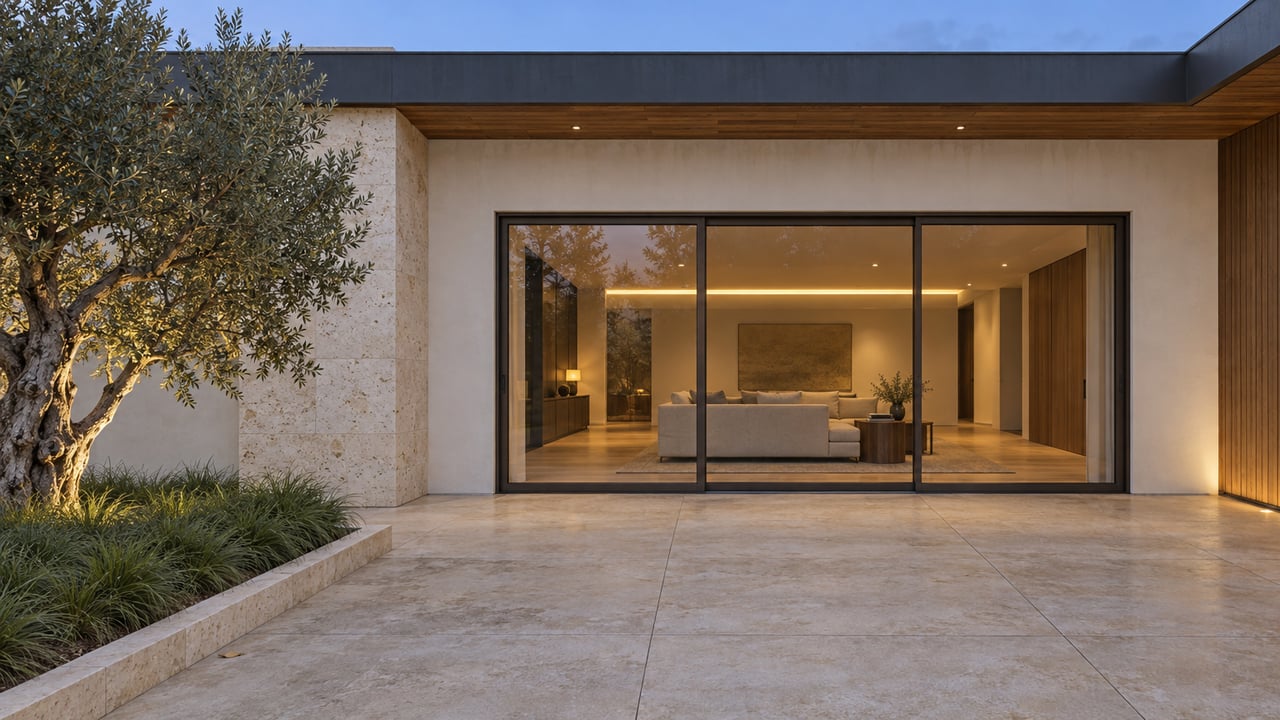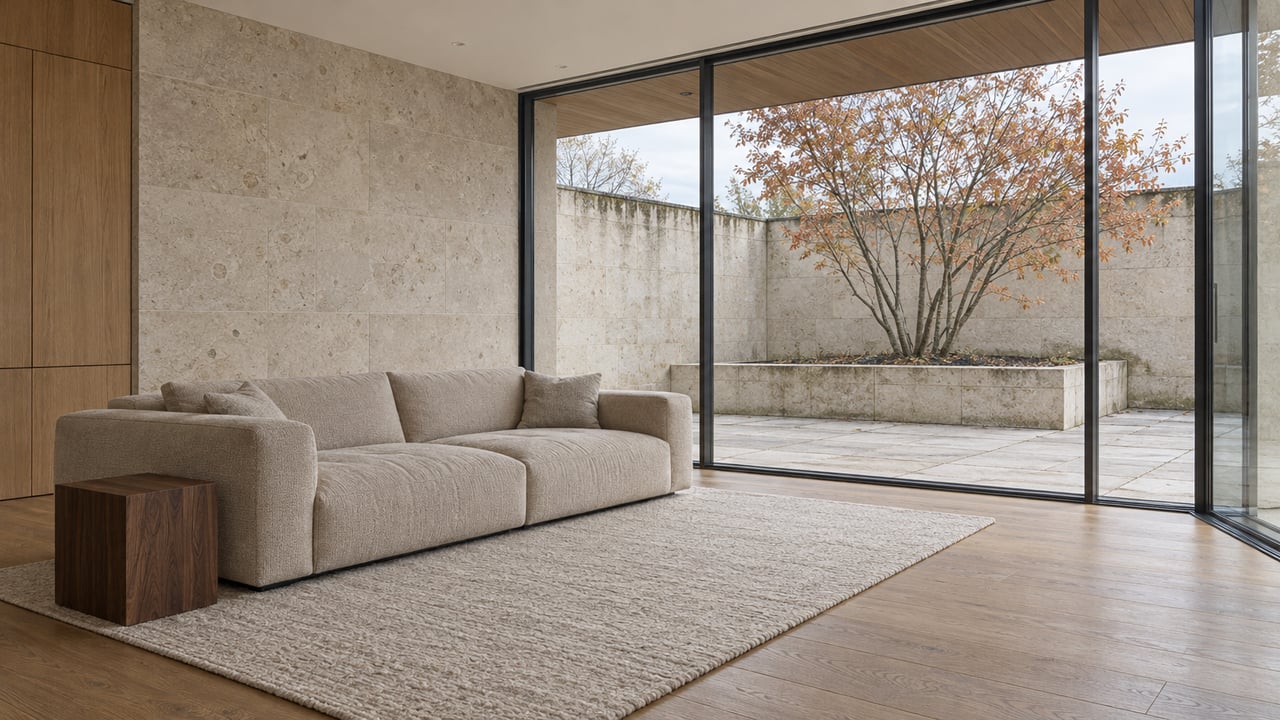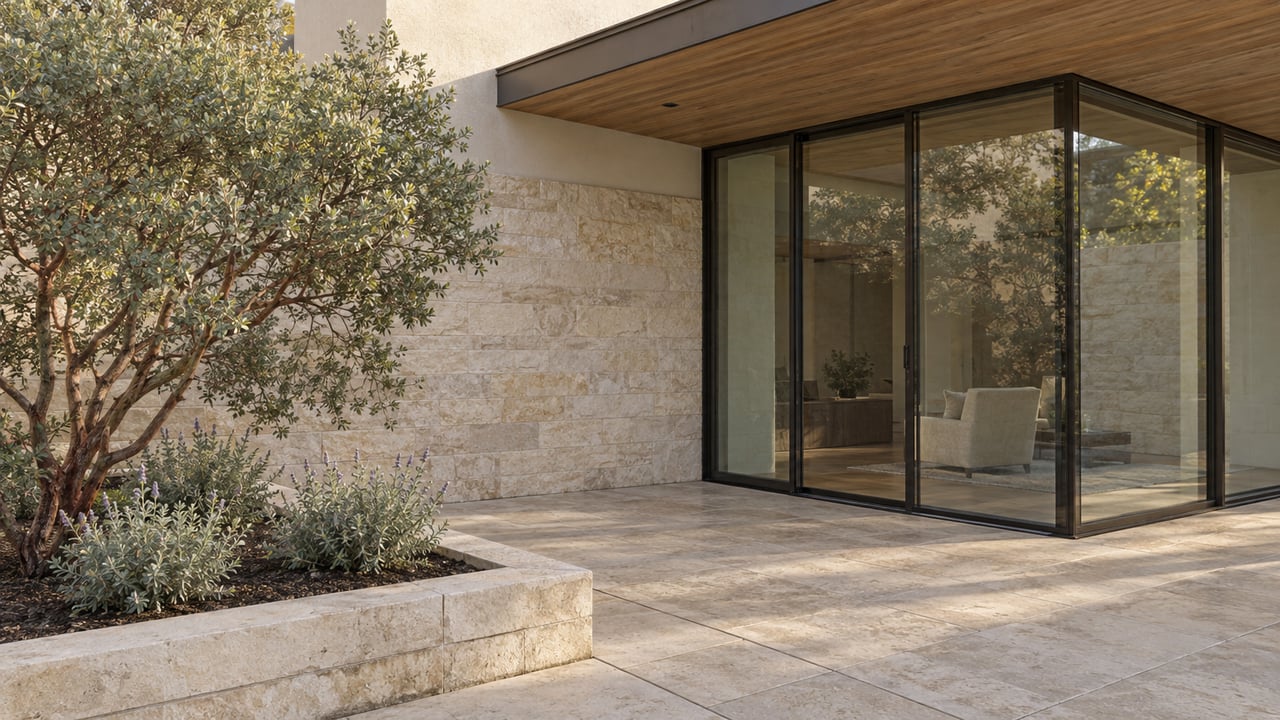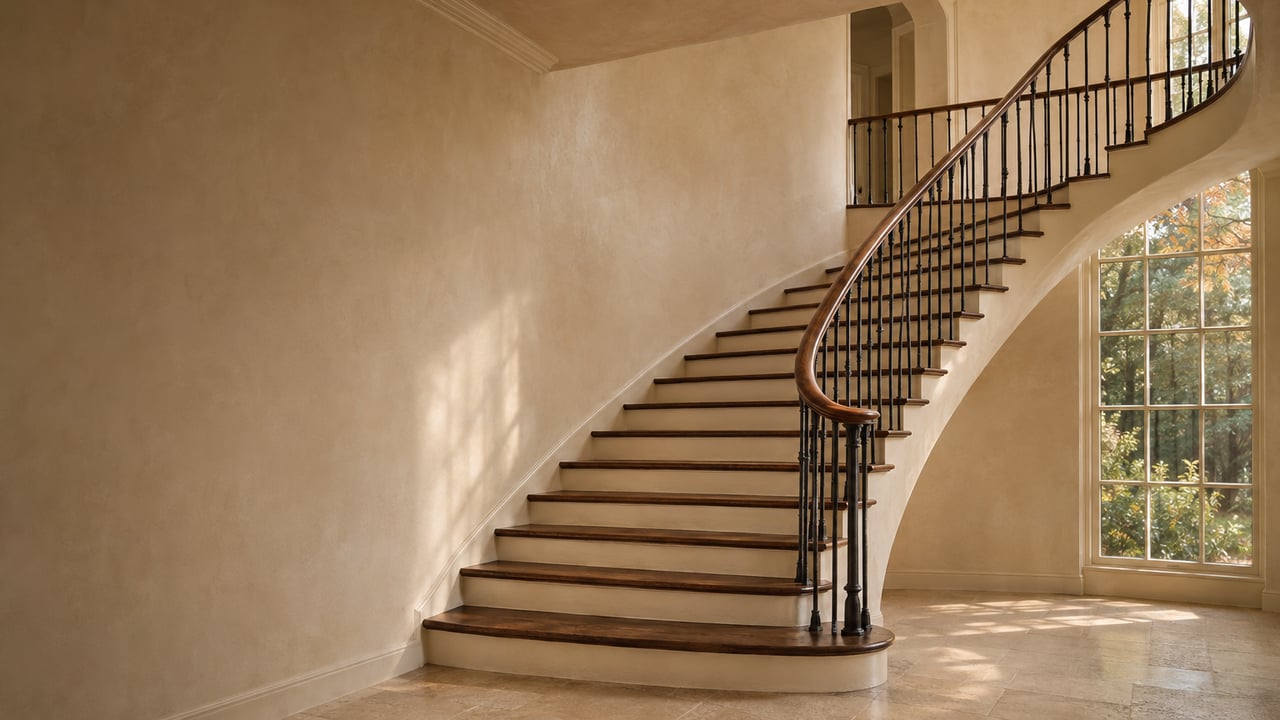
At 651 Siena Way, a short drive from the Stone Canyon gates, stands a house Paul R. Williams designed in 1936. The Los Angeles Conservancy lists it as the Castera-Ward Residence. A few minutes away on Ambazac Way is the Nellie Hirsch House, built in 1933 and 1934. In 1982 Julius Shulman photographed it for an archive now held by the Getty Research Institute. Both are private homes, and both are older than most of the trees that hide them.
This winter, Los Angeles is giving Williams the largest museum survey he has ever had, spread across three institutions. The Getty describes the series as the largest and most comprehensive museum presentations on an architect whose career covered nearly six decades and more than 3,000 structures. He was the first Black architect licensed west of the Mississippi and the first known Black member of the American Institute of Architects. The shows open in sequence from east to west, so the one at the top of the Sepulveda Pass, the closest to Bel Air, opens last. It also has the least to do with the Bel Air houses. So in Bel Air the season works best in a particular order, with the neighborhood itself supplying one chapter.
The Order the Shows Open
The survey started in August near downtown and reaches the Westside in mid-December. As of this week:
- USC Fisher Museum of Art, "Paul R. Williams: An Architect Considered." Open since August 18 and running through March 13, 2027. The museum is open Tuesday through Saturday, 10 a.m. to 4 p.m. Admission is free. Fisher closes on USC football dates, and its visit page lists Saturday, November 21 as one of them.
- LACMA, "Paul R. Williams: Architect for Living." Opened November 15 in the Resnick Pavilion and runs through May 31, 2027. Gallery visits need a timed-entry ticket. General admission is $25 for L.A. County residents and covers current exhibitions.
- Getty Center, "Paul R. Williams: Architecture Across the Color Line." Opens Tuesday, December 15 and runs through March 14, 2027. Admission is free with a timed reservation.
All three draw on the same source. The Getty Research Institute and the USC School of Architecture jointly acquired Williams's archive in 2020. USC says it holds about 35,000 plans and 10,000 original drawings, along with renderings, photographs and correspondence. Many of his business records were lost in a 1992 fire.
Three Rooms, Three Sides of One Architect
Each museum shows a different side of Williams, and the order matters once you see what each one covers.
Fisher's show is about collective living. It covers 31 housing projects alongside new commissioned works and photographs by Julius Shulman and Janna Ireland. LACMA's show is the broadest. Its gallery tour listing covers residential, civic, religious, commercial and hospitality work, public housing and hotels included, with archive drawings and photographs that have never been exhibited.
The Getty's show, the one nearest Bel Air, marks the first public showing of the archive itself. It puts its weight on Williams's work for and with Black communities. The museum's exhibition page describes its subject this way:
"the collective construction of the architecture of Black Los Angeles"
The Getty's lead image is a rendering of First African Methodist Episcopal Church, not a hillside house. USC's announcement also places First AME, Second Baptist Church and the Golden State Mutual Life Insurance Co. at the center of his legacy. It describes them as buildings that fostered communal strength and financial opportunity during an era of segregation and exclusion.
That side of Williams was less familiar on the Westside. Locally he has long been known for the Beverly Hills Hotel and for homes built for clients such as Frank Sinatra and Lucille Ball. In Bel Air, that residential Williams is already part of the neighborhood.
The Williams Already on These Streets
The Conservancy and city records attribute several houses near Bel Air to Williams. All of them are private.
- Castera-Ward Residence, 651 Siena Way, Bel Air, 1936.
- Nellie Hirsch House, 10800 Ambazac Way, Bel Air, 1933–34. Shulman's 1982 photographs of it are part of the Getty Research Institute's holdings.
- Jay Paley House, 1932–36. The Conservancy files it under Holmby Hills and describes it as nestled in the hills of Bel-Air.
- Hunt Residence, 7 Oakmont Drive, Brentwood, 1940.
- Westwood Medical Plaza, 10921 Wilshire Blvd., 1960–62. Unlike the houses, this one is commercial and sits on a public street.
The list used to be longer. Williams designed the Weinberg Residence, between Delfern Drive, Sunset Boulevard and Baroda Drive, in 1938. A Los Angeles City Planning report found that substantial portions of its exterior had been demolished by 2019, and the property did not qualify for monument designation. Bel Air holds the residential work the museums give less room to, and some of it has already gone.
Three Weeks of Candlelight Before the Getty Opens
Before Williams arrives at the Getty, the Center opens a show that suits the shortest days of the year. "A Light in the Dark: Joseph Wright of Derby" opens Tuesday, November 24 and runs through March 14, 2027. It brings back together the candlelight pictures Wright showed in London in the 1760s. The checklist includes "A Philosopher Giving that Lecture on the Orrery" and "Two Girls Dressing a Kitten by Candlelight." It also includes the Getty's own "Two Boys with a Bladder." The museum acquired the rediscovered painting in 2020, and a two-year conservation treatment revealed an unusual use of silver leaf.
Saturday is the evening to go. The Center stays open until 9 p.m. on Saturdays and closes at 6:30 p.m. the rest of the week. It is closed Mondays. Parking costs $25 during the day, $15 after 3 p.m. and $10 after 6 p.m. On Saturdays after 6 p.m. it is free. So a Saturday evening visit to candlelit paintings costs nothing beyond the timed reservation, which opens six weeks ahead.
Two Getty dates are worth planning around:
- Saturday, December 5, 5 to 9 p.m. "Drawing in the Dark" is a free drop-in where visitors of all ages sketch costumed models under dramatic, Wright-inspired lighting. A free live drawing demonstration on light and shadow runs the same night at 5:30, 6:30, 7:30 and 8:30.
- Sunday, December 6, 4 p.m. A free talk on Wright as painter and draftsman, with online access.
Plan around the holidays, too. The Getty is closed on Thanksgiving, November 26, and on Christmas Day. It closes early on Christmas Eve and New Year's Eve.
The east side of the series is busy in the same weeks. This evening, Thursday, November 19, at 6:30 p.m., Fisher's curators Milton S.F. Curry and Valéry Augustin talk about housing and the postwar Black middle class in a free program called "The Missing Middle," which requires an RSVP. On Saturday, November 21, LACMA and the Los Angeles Conservancy present "Paul Revere Was Here," a self-guided tour of Williams buildings. Tickets are $35, or $30 for members. The 10 a.m. entry has sold out, and a noon entry has been added. The tour stops are Founder's Church, Second Baptist Church, the Taylor Residence, Golden State Mutual Life Insurance and First AME, the same buildings the Getty's show puts at the center of his story.
The Week of December 15
When the Getty show opens on Tuesday, December 15, the week fills up close to home. On Wednesday through Friday, December 16 to 18, Hotel Bel-Air holds "Movies Under the Stars" on its Front Lawn. It screens "Elf," "A Christmas Story" and "The Holiday," one per night. Admission is $100 per person, and a private fire pit for up to six costs $1,000.
Friday the 18th has a conflict. The same evening at 7 p.m., LACMA hosts "How Paul R. Williams Made Los Angeles," a free program that requires an RSVP. Janna Ireland, whose photographs document Williams's buildings, joins curators Staci Steinberger and Sarah Locke. If you want both, the lawn screenings on the 16th and 17th leave Friday free for the talk.
The Getty's Williams show then runs through March 14, 2027, so the weeks after the holidays leave time to see it again.
Architecture is the reason many of the homes in these hills were built the way they were, and it is the part of a property we spend the most time trying to understand and present well. If you own a home with a documented architect behind it and want to talk about its history and its future, Brendan Brown welcomes the conversation. Schedule a confidential consultation.