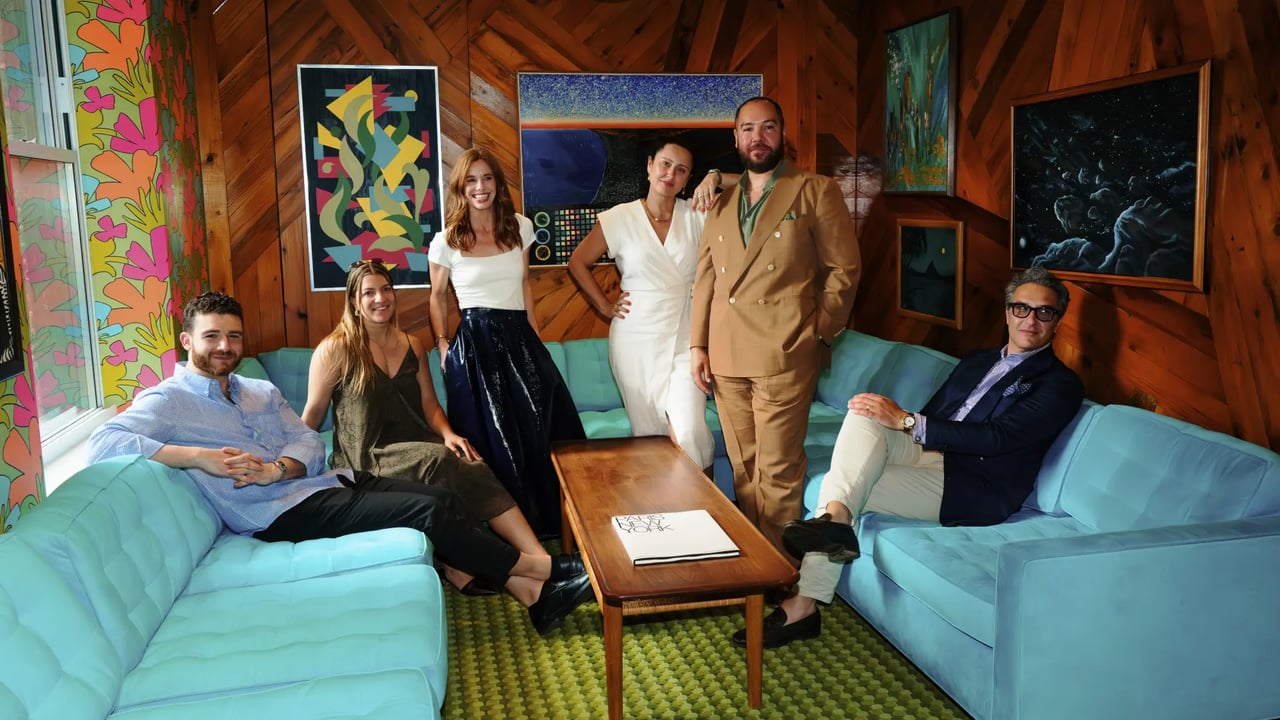
When The Hollywood Reporter dropped its article on the 2026 New York Power Broker Awards yesterday morning, the headline was technically about New York real estate. But to me, the real story was bigger than New York. It was about where luxury real estate is going — and, frankly, where it has already gone for those of us living inside the business every day.
The event, presented by The Society Group in partnership with The Wall Street Journal and The Hollywood Reporter, brings together the most influential real estate agents in one of the most competitive luxury markets in the world. THR’s Power Broker platform has become a cultural marker for high-end real estate, highlighting agents who have shaped major deals, media influence, philanthropic work, historic preservation, and the public understanding of what elite representation actually looks like.
I know this ecosystem well. As part of UPFRONTS and through my relationship with The Society Group over the years, I have seen firsthand how precisely they understand the intersection of real estate, media, celebrity, influence, and high-end property. No one does it better. And frankly, I am not sure anyone can. They understand that the modern luxury real estate business is not just about visibility — it is about context, timing, placement, and cultural authority.
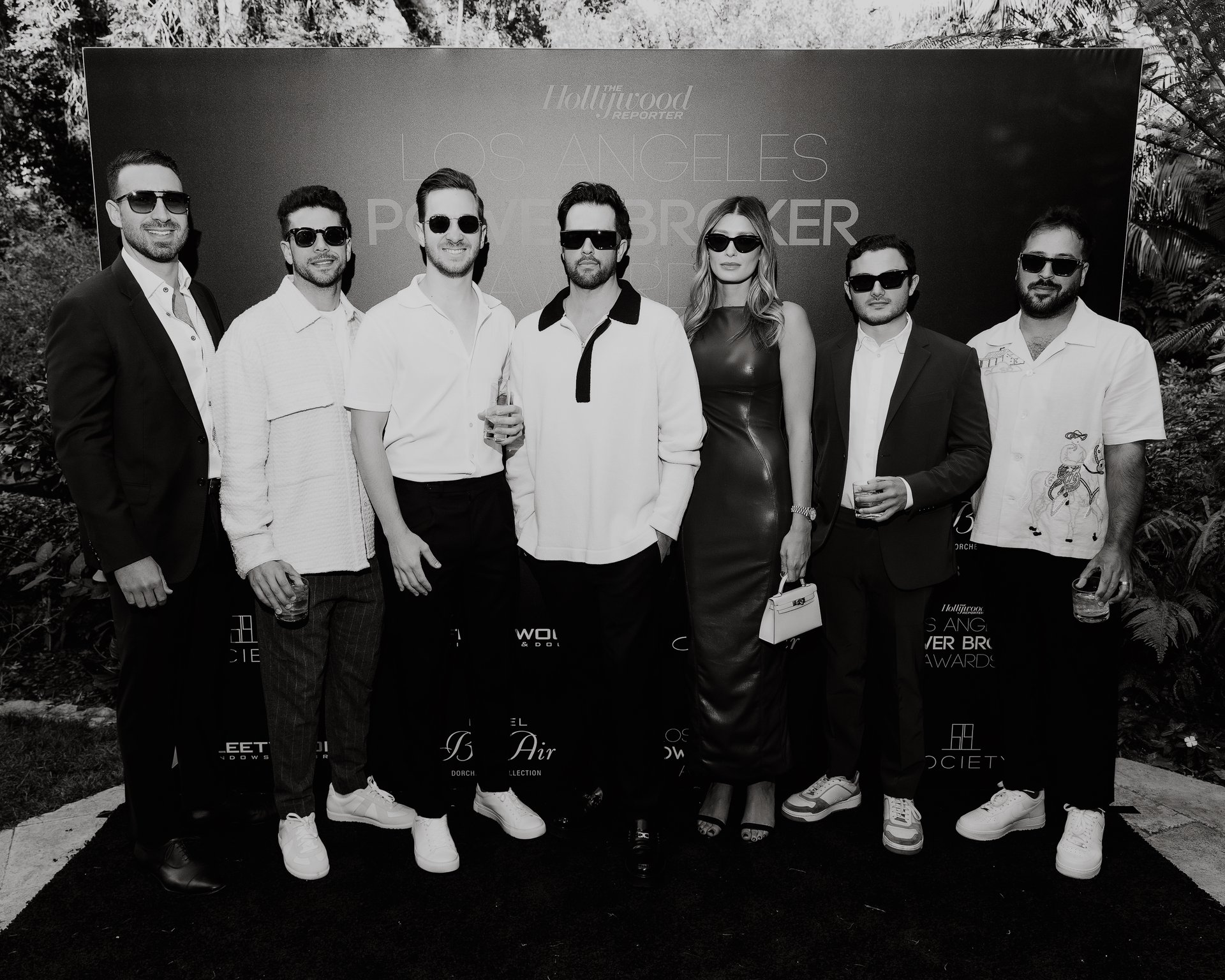
I have attended and been recognized at the west coast counterpart, The Los Angeles Power Broker Awards. When I attended the 2024 LA Power Broker Awards at the Bel Air Hotel, I was recognized as a Rising Star of the Year. That experience gave me a very clear view of what these platforms actually represent. They are not just industry events. They are signals. They show where the luxury real estate business is heading before the rest of the market catches up.
It was also great to see friends and colleagues recognized for the work they are doing at the highest level. I am always proud to see my friend Steve Gold nominated for Media Maverick. Steve is, in every sense, the ultimate media maverick — and having hosted the awards last year, he understands the room better than most. He also understands something I, and many others in that room, deeply believe: at this level, media is not noise when it is handled with intelligence. It is positioning. It is context. It is part of how the market understands value, taste, and authority.
That is why this Power Broker moment matters. Not because it is another awards event, but because it confirms what the best agents in luxury real estate already know: this business is no longer just transactional. It is advisory. It is cultural. It is private. It is deeply personal. At the highest level, a great real estate advisor is not simply opening doors. They are protecting people, shaping narratives, reading rooms, and understanding what a client’s life actually requires.
For buyers and sellers making moves in Los Angeles luxury real estate, from Beverly Hills, Bel Air, and Malibu, to Newport Beach, Montecito, and New York City- that distinction matters more that ever.
A Luxury Home Is Never Just a Listing
One of the biggest mistakes people make about luxury real estate is thinking the product is the house.
The house matters, obviously. Architecture matters. Location matters. Light matters. Land matters. Views matter. Privacy matters. The comps matter. But the house is only one part of the equation. At the top of the market, the real product is judgment.
I have walked into homes where the materials were extraordinary, the location was rare, and the price made sense — and still, something was off. Maybe the house felt too exposed. Maybe the architecture photographed well but did not live well. Maybe the layout was designed for the image of luxury, not the reality of how serious people actually live. Maybe the home was beautiful, but not intelligent.
That distinction is everything.
Luxury buyers today are more sophisticated than ever. They do not want to be sold a fantasy that collapses the second they move in. They want the truth. They want someone who can say, “This is special,” but also someone who can say, “This is not right for you.”
I have learned that the best clients respect honesty more than performance. Especially in Los Angeles, Beverly Hills, Bel Air, Malibu, and Montecito, where the line between lifestyle, image, privacy, and investment can blur very quickly. A house can look spectacular online and still be completely wrong for someone’s actual life.
That is why representation matters. The right luxury real estate advisor is not just evaluating a property. They are evaluating how a home supports the client’s private life, public life, family, security, business, design sensibility, and long-term investment strategy.
At the highest level, clients are not simply asking, “What is the price per square foot?” They are asking, often without saying it directly: Does this home understand my life? Can I be safe here? Can I entertain here? Can I disappear here? Can I build something here? Can I become who I am trying to become here?
That is the real conversation.
The Power Broker Moment Is About Stewardship
One of the moments from the awards that stayed with me was when Owen announced the second honor and framed historic architecture exactly the way serious real estate people should.
"There is a difference between buying a great house and being trusted with it. The brokers nominated understood that historic architecture in New York is not inventory. It is a record. A pre-war floor plan. A landmark that has lasted three mayors and a handful of marriages. These homes require a steward, not a salesperson."
That line captures something essential about the upper end of the market.
A great property is not just a commodity because someone wealthy can afford it. Certain homes carry memory. They carry craft. They carry the ambitions and failures of previous owners. They carry an architect’s original idea, a neighborhood’s evolution, and a city’s sense of itself. In New York, that might mean a pre-war residence with proportions that cannot be replicated. In Los Angeles, it might mean a Paul Williams, a Wallace Neff, a Trousdale architectural, a Montecito Spanish, or a Malibu house where the restraint is the luxury.
That is why I was glad to see Carl Gambino of Compass recognized as Agent of Historic Architecture. Historic homes demand a different kind of intelligence. You are not simply selling square footage. You are explaining why something deserves to last. You are helping the next owner understand that taste is not just acquisition. Sometimes, taste is restraint.
That is also why these awards matter. When Terry Cohen, Gary Cooper, and Preston Kaye of Compass and Hedgerow are recognized for Hamptons Sale of the Year, or Cathy Franklin of Corcoran is honored for Stratospheric Sale, the industry is not just applauding numbers. It is acknowledging the complexity of executing at a level where the asset, the client, the timing, and the narrative all have to align.
The best deals are rarely simple. They just look simple after the right people have handled them.
That is true whether you are selling a landmark townhouse in New York, an oceanfront estate in Malibu, a private compound in Beverly Hills, or a discreet architectural residence in Bel Air. The assignment is never just to sell the house. The assignment is to understand what the house means — and who should be trusted with it next.
Privacy Is the New Prestige
For years, people associated luxury with visibility. The biggest house. The loudest view. The most recognizable address. The most dramatic entrance.
That still exists, but it is not where the smartest part of the market is moving.
The most sophisticated clients I work with are not looking to prove they have money. They already know that. Their friends know that. Their bankers know that. What they want now is privacy, ease, security, beauty, and a home that does not feel like it is performing for strangers.
In Los Angeles luxury real estate, this comes up constantly.
A client may love Trousdale for the views but need more privacy than the architecture allows. Another may want Malibu for the romance but realize they need Beverly Hills for daily life. Someone else may think they want Bel Air until they understand the rhythm of Montecito. Sometimes the best home is not the most obvious one. Sometimes the best home is the one that gives the client their nervous system back.
That is a very real part of this business, even if people do not talk about it enough.
The right property can change how someone lives. The wrong one can make success feel like a trap.
This is why off-market luxury properties and private client advisory have become so important. Not every client should be searching publicly. Not every property should be launched publicly. Not every deal benefits from exposure. Some of the best real estate decisions happen quietly, with discipline, patience, and the right circle of trust.
Luxury, at its highest level, is not always about being seen.
Often, it is about being protected.
The Best Agents Shape Context
The Society Group has always understood that real estate is no longer just about putting a property in front of people. It is about positioning it correctly, protecting the narrative, and understanding the power of the right room. That is why their creation of the Power Broker Awards, and partnering with The Wall Street Journal makes sense. The agents being recognized are not simply moving houses. They are shaping context.
That is where the business has changed.
At the highest level, a great luxury real estate advisor has to know how to move between worlds. One conversation may be about price. Another may be about architecture. Another may be about press exposure. Another may be about security. Another may be about whether a client’s family can actually live well in the home. Those conversations require more than market knowledge. They require emotional intelligence, discretion, and cultural fluency.
That is why I was happy to see Greg Williamson of Douglas Elliman recognized for Philanthropic Impact. Real estate is a business built around assets, but the best people in the business understand that influence has to move beyond closing statements. The same applies to Sami Hassoumi of Brown Harris Stevens being recognized for Celebrity Property Portfolio. Representing high-profile clients is not about proximity to fame. It is about protecting people whose homes are often one of the last places they can be fully private.
James Weiss of Corcoran winning Rising Star also matters because the next generation of this business is not going to win by copying the old playbook. They will win by understanding where the client has moved: more informed, more global, more private, more design-literate, and less impressed by theater.
The Janice Chang Team of Douglas Elliman being recognized as Team of the Year reflects another truth I believe strongly: the best modern representation is rarely a solo performance. Behind every serious client experience is coordination, discipline, communication, and an ability to make complexity feel calm.
Taste Has Become a Market Advantage
Taste is not decoration. Taste is decision-making.
It is knowing when a house has been overdesigned. It is knowing when a renovation erased the soul of a property. It is knowing when a view is worth the premium and when it is being used to distract from a bad floor plan. It is knowing the difference between a home that is expensive and a home that is important.
That is why the best luxury real estate agents are not just market experts. They are editors.
I think about this constantly when advising clients. A great estate should have a point of view. It should know what it is. Modern Spanish in Montecito. A refined architectural in Bel Air. A discreet compound in Beverly Hills. A beach house in Malibu that actually understands restraint. The best homes do not beg for attention. They hold it.
That is also how I think about luxury property marketing.
Not every property needs cinematic video, drone shots, dramatic music, and a campaign that looks like a perfume commercial. Sometimes that works. Sometimes it is exactly wrong. The marketing should come from the property, not be forced onto it.
A great home already has a language. The job is to speak it fluently.
That is why editorial positioning matters in high-end real estate. A property should not be flattened into generic luxury language. It should be understood on its own terms. A Montecito estate is not the same as a Trousdale architectural. A Malibu beach house is not the same as a Holmby Hills legacy property. A New York pre-war residence is not the same as a new-development penthouse.
The market may call all of them luxury.
A good advisor knows the difference.
Media Matters — But Only When It Serves the Client
Ryan Serhant of SERHANT winning Media Maverick is another reminder that media has become inseparable from modern luxury real estate. But the important point is not simply being visible. Visibility by itself is easy. Strategy is harder. The mistake many agents make is confusing attention with authority.
At the top of the market, media should never be random. It should be intentional, calibrated, and in service of the client or the property. Some homes deserve a global spotlight. Some should be moved quietly. Some clients benefit from public positioning. Others need silence. Knowing the difference is the work.
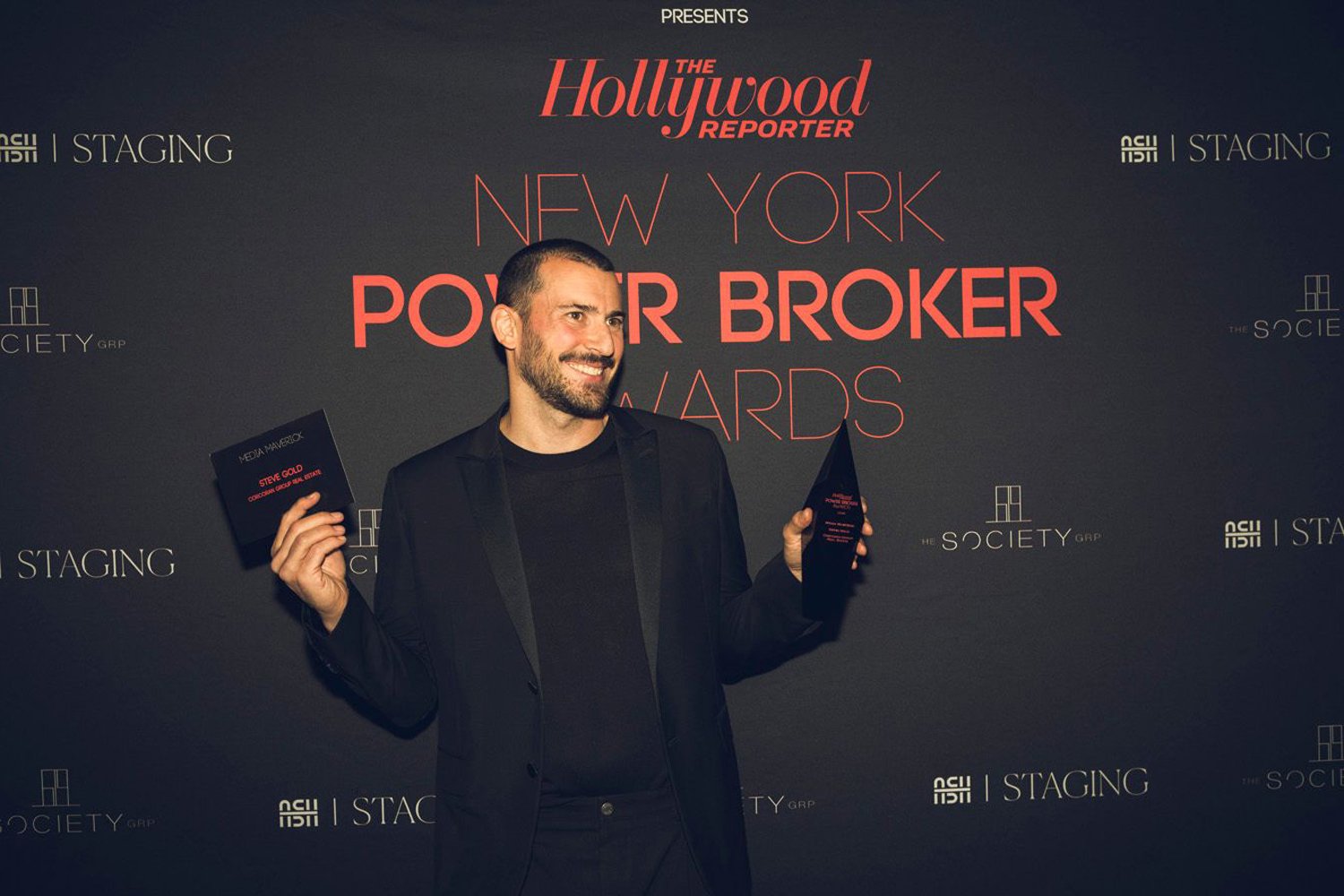
That is why Im always thrilled to see my good friend Steve Gold nominated in that same category, the same award that won last year. Steve has always understood the relationship between real estate, media, style, and trust. The best media-facing brokers are not performing for cameras. They are using visibility as one more tool in a larger advisory practice. That is the future of luxury real estate and Steve is at the forefront.
The future belongs to advisors who understand visibility, but do not worship it. Agents who know how to create attention when it serves the client, and silence when silence is the more powerful move. Brokers who understand that the most important deals often happen behind closed doors, long before the market ever hears about them.
I have lived that. I know that. And I think this is exactly where the business is going.
Media-forward real estate does not mean louder real estate. It means smarter real estate. It means understanding when a property deserves editorial attention, when it should remain private, and when the best strategy is not to chase the spotlight but to control the frame.
For high-net-worth clients, founders, entertainers, families, athletes, executives, and global buyers, that distinction is not cosmetic. It is essential.
New York and Los Angeles Are Speaking to the Same Buyer
What I found interesting about the 2026 New York Power Broker Awards is how much the conversation now mirrors what is happening in Los Angeles.
New York luxury real estate has always been about scarcity, pedigree, and proximity. Los Angeles luxury real estate is about privacy, scale, light, architecture, and lifestyle. Montecito adds another layer entirely: quiet power, nature, family, and restraint.
But today’s luxury buyer often moves between all three worlds.
They may have a primary residence in Los Angeles, a foothold in New York, a place in Montecito, and an international rhythm that touches London, Paris, or the South of France. Their real estate portfolio is not just a collection of addresses. It is an operating system for their life.
That is why the advisor’s role has expanded.
You are not just finding someone a house. You are helping them understand where they belong next.
That requires more than access. It requires pattern recognition. It requires knowing when someone is buying from ambition, when they are buying from emotion, when they are buying from fear, and when they are finally ready to buy from clarity.
The best deals usually happen in that last category.
This is why the conversation around luxury real estate has to move beyond listings. Serious clients need advisory across markets, timing, lifestyle, architecture, privacy, resale, press exposure, and long-term value. A house is not just an address. It is a decision about how someone wants to live.
The Future Belongs to Advisors, Not Salespeople
The word “broker” will always be part of the business, but I think the future belongs to advisors.
Salespeople chase the deal. Advisors protect the client.
There is a major difference.
An advisor knows when to slow a client down. An advisor knows when the market is giving them leverage. An advisor knows when a seller is testing a number, when a buyer is emotionally attached, when a property is being mispriced, and when a house has qualities that will never show up properly in a spreadsheet.
Some of the most important advice I give clients has nothing to do with pushing them toward a purchase. Sometimes the best advice is: wait. Sometimes it is: do not chase this. Sometimes it is: this house is better than you think. Sometimes it is: this will not age well.
That kind of honesty builds trust.
And trust is the only real currency at the top of the luxury real estate market.
The best advisors understand that the deal is only one chapter. The relationship is the real asset. A client should feel protected before, during, and after the transaction. They should feel that their advisor understands not only what they can buy, but what they should buy — and what they should avoid.
That is the standard.
What I Know to Be True
The Hollywood Reporter’s 2026 Power Broker Awards may have been a New York real estate event, but the message applies everywhere luxury real estate is becoming more sophisticated.
The industry is changing because the client has changed.
The modern luxury client does not want noise. They want intelligence. They do not want to be impressed by theatrics. They want to be understood. They do not want an agent who simply knows what is available. They want an advisor who knows what matters.
I agree with that because I have lived it in real time with clients across Los Angeles, Beverly Hills, Bel Air, Malibu, Montecito, and beyond.
The best homes are not always the loudest. The best deals are not always public. The best agents are not always the ones performing the most. And the best client relationships are built in the quiet moments — the private calls, the honest warnings, the off-market conversations, the details no one else sees.
Luxury real estate has always been about property.
But now, more than ever, it is about people.
Their privacy. Their ambition. Their taste. Their families. Their public lives. Their private lives. Their next chapter.
That is the work.
So thank you, The Hollywood Reporter, and thank you, The Society Group. We are grateful for the recognition this platform brings to the people doing the work seriously.
This new era of luxury real estate feels less like a shift and more like a correction.
The business is finally catching up to what the best advisors have always known: luxury is not about showing everything.
It is about knowing exactly what to reveal, what to protect, and what to keep sacred.
For those navigating the next move — whether in Los Angeles, Beverly Hills, Bel Air, Malibu, Montecito, or beyond — the right home is never just a transaction. It is a strategy, a refuge, and, when chosen well, a very clear reflection of the life you are building. Please don't hesitate to reach out should you need assistance.
x Brendan