Buried in the Beverly Hills Municipal Code is a line most Trousdale Estates buyers never read before they close escrow. The ordinance written specifically to protect the neighborhood's sightlines states plainly that "it is not the intent of this ordinance to create an expectation that any particular view or views would be restored or preserved."
That sentence sits at the center of a neighborhood where the view is, by a wide margin, the reason the price per square foot outruns almost everywhere else in Beverly Hills. Buyers assume they are purchasing a fixed asset: a slice of the Los Angeles basin, framed and permanent, the way it looks on the day they sign. What the city's own code says is closer to the opposite. In Trousdale, a view is something you have to keep proving, keep defending, and in some cases keep paying to maintain, through a process built with real friction points that most agents gloss over and most buyers never ask about until a neighbor's tree line has grown tall enough to matter.
A Neighborhood Designed to Protect Sightlines, Not Guarantee Them
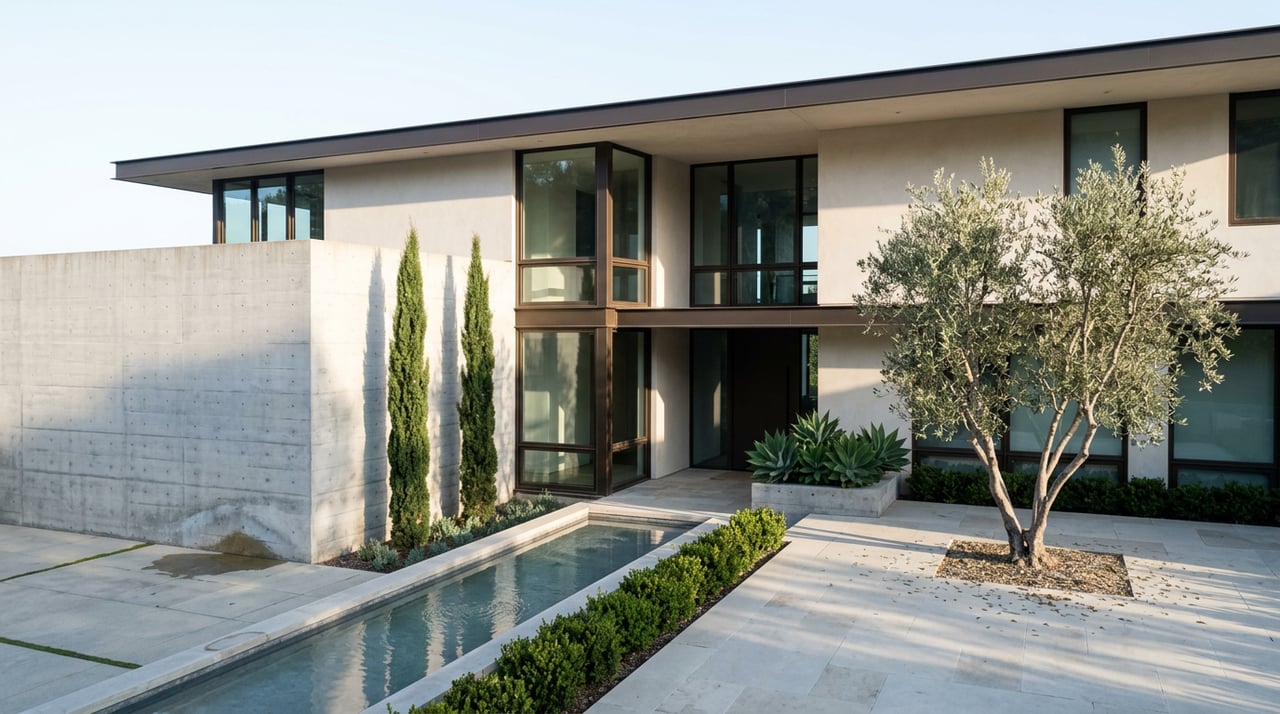
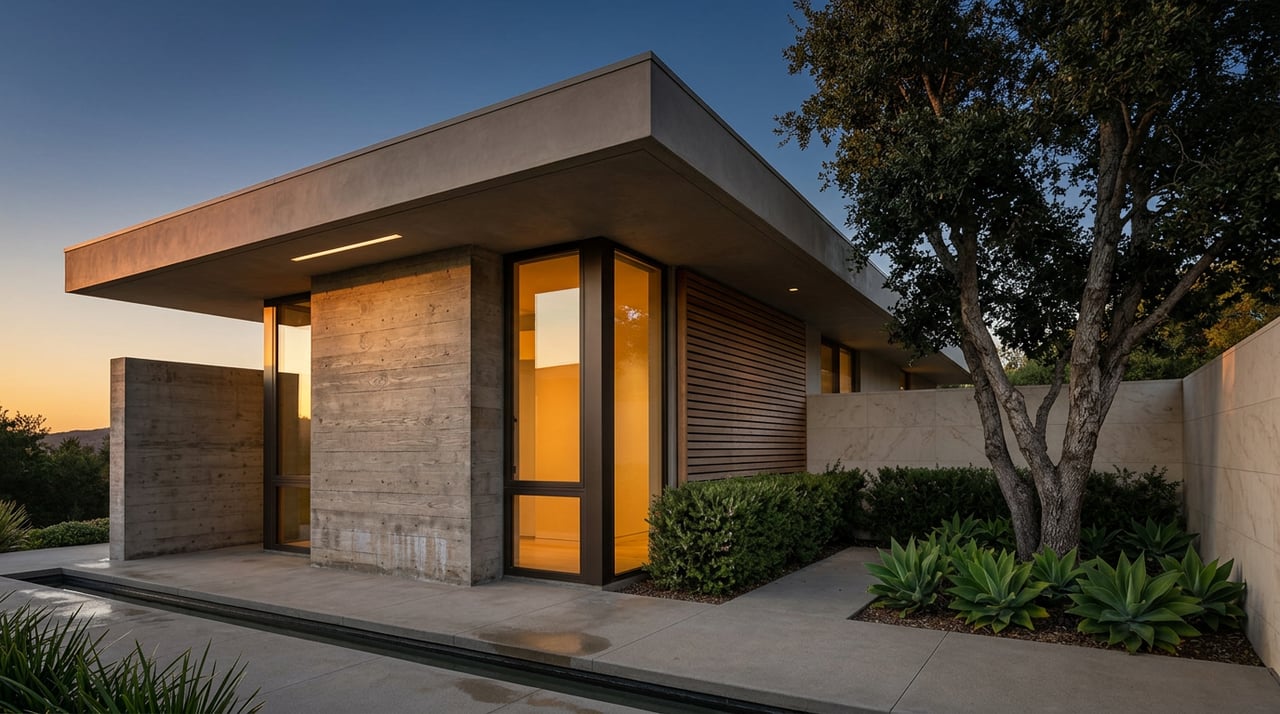
Trousdale's defining rule dates to 1987. By the early 1980s, remodels and new construction had begun climbing higher and blocking neighbors' views across the hillside, and the Trousdale Estates Homeowners Association worked with the City of Beverly Hills to write structural limits directly into the zoning code. The result, the Trousdale Ordinance, capped new construction at 14 feet, barred grading beyond the existing flat pad, and required hillside fences to stay open rather than solid. It is the reason Trousdale still reads as a low, horizontal enclave rather than a hillside stacked with competing rooflines.
That rule solved one problem. It said nothing about the other thing that blocks a view over time, which grows slowly enough that nobody notices until it's finished the job: trees.
The Part of the 1987 Rule That Never Touched a Single Tree
Height limits control structures. They do nothing about a hedge or a stand of trees on a neighboring lot that grows slowly enough for years to pass before anyone notices how much of the basin it has erased. Beverly Hills addressed this gap in 2011 with the Trousdale Estates View Restoration Ordinance, codified in Chapter 8, Article 1 of the municipal code, and refined the following year with revised hedge-height standards under Section 10-3-2616. According to the city's own summary, the ordinance exists specifically to address "views that have been impaired by foliage growing on a neighbor's property," a protection that exists in almost no other part of Beverly Hills. The city's FAQ is direct on this point: outside Trousdale, Beverly Hills generally does not regulate private trees for view purposes at all.
On paper, this looks like a strong second layer of protection stacked on top of the 1987 height rule. In practice, the ordinance is narrower and slower than the marketing language around "protected views" suggests, and the gap between those two things is where a buyer's assumptions get expensive.
How a Protectable View Actually Gets Established
Filing a claim under the View Restoration Ordinance is not a phone call to code enforcement. A property owner has to first be found to hold a "Protectable View," a legal determination made by the city's Planning Commission, tied to a specific "Viewing Area" on the property, which is the exact spot the average resident would use to enjoy the sightline. The ordinance only reaches views of the Los Angeles basin, meaning city lights and ocean glimpses toward the coast. It explicitly excludes canyon views and ridgeline views, so two buyers standing on adjacent decks, one looking at the basin and one looking at a canyon, are not protected equally under the same code.
Before any of that reaches a hearing, the owner has to fund a Safe Harbor Area survey, stamped by a registered landscape architect or arborist, that establishes a plane below which foliage is exempt from the ordinance regardless of what it blocks. The city requires neighbor outreach and mediation before an application can even be scheduled for a public hearing. None of this is unusual for municipal process. What is unusual is what happens after a decision is made.
The Clause That Keeps Most Claims From Ever Being Filed
The City's own View Restoration Guidelines contain an indemnification provision that reshapes the entire calculation. If the city rules in a view owner's favor and the foliage owner challenges that decision in court, the applicant, not the city, is on the hook for the city's litigation costs. The guidelines describe this cost as potentially substantial, and note that the City Council has been examining ways to reduce that burden. As of the most recent guidance, it remains in place.
This is the detail that separates the neighborhood's marketing from its mechanics. A protection that exists on the books but carries open-ended legal exposure for the person invoking it is not the same thing as a guarantee. It functions less like an entitlement and more like an option a buyer can exercise, at real cost, if the view is valuable enough to justify the risk. In a neighborhood where lots regularly transact in the eight-figure range, that math works for more owners than it would almost anywhere else in the country. That is arguably the actual product Trousdale is selling: not a view, but a buyer pool wealthy enough to use the process the ordinance created.
Title, Not the Listing Sheet, Tells You What's Actually Protected
A separate and older layer sits underneath all of this. Some Trousdale parcels carry recorded view easements written into the original subdivision paperwork from the 1950s and 1960s, when Paul Trousdale's Architectural Committee, with Allen Siple acting as supervising architect, first laid out the neighborhood's 532 lots. Those easements are private property rights, not city ordinance protections, and they can restrict landscaping or structural massing on a specific neighboring parcel. They do not show up on a listing sheet or in a walkthrough. They surface in a title report, and only there.
The practical result is that two homes on the same block, similar in size and view quality, can carry materially different enforceability. One may have a recorded easement running in its favor, giving its owner a contractual right to a sightline that survives regardless of who owns the neighboring lot. The other may have no such easement, leaving its owner entirely dependent on the slower, costlier city process described above. A buyer comparing two nearly identical Trousdale listings without a title review is, in a real sense, comparing two different assets that happen to look the same from the street.
What the Q1 2026 Numbers Are Actually Pricing
Against this backdrop, the recent pricing data reads differently. Through the first quarter of 2026, Trousdale sale prices ran roughly 25 to 30 percent above the Beverly Hills single-family median, which stood near $5.62 million as of May 2026. Transactions in that window clustered between roughly $9 million and $22 million for renovated, period-correct mid-century homes on standard lots, with ground-up contemporary builds and flagship trophy sales pushing past $30 million and into the $40 million range. Across Beverly Hills overall, cash accounted for roughly 41 percent of single-family closings in early 2026, a share that mutes the effect of interest rates on this tier of buyer.
That premium is not simply paying for square footage or a photogenic sunset. Part of it is paying for entry into the small pool of owners equipped to defend a sightline through a process with real procedural cost and real legal exposure. Part of it is paying for architectural pedigree from a roster that includes A. Quincy Jones, Paul R. Williams, Wallace Neff, and Harold Levitt, names whose original designs were built specifically within the same low, view-disciplined framework the city later wrote into law. The two are connected. A restored A. Quincy Jones or Harold Levitt home on a lot with a clean title and a documented, enforceable view sits in a different category from a comparably priced spec build on a lot where the sightline has never been tested, legally or otherwise.
| Protection | What it actually covers | What it does not cover |
|---|---|---|
| Trousdale Ordinance (1987) | 14-foot height limit, no expansion of the graded building pad, open hillside fencing | Foliage growth on neighboring lots |
| View Restoration Ordinance (2011) | A city process to petition for a Protectable View finding and foliage trimming | A guaranteed outcome, canyon or ridge views, or protection from litigation costs if the ruling is challenged |
| Recorded view easement | An enforceable private property right tied to specific parcels | Universal presence. Most Trousdale lots have none, and it only surfaces in a title search |
A Few Questions Worth Asking Before You Write an Offer
Does the View Restoration Ordinance apply to a tree on city property? No. The ordinance covers private foliage only. A tree on a public right of way or city-owned slope falls outside the process entirely, regardless of what it blocks.
Can I add a second story if the current house is single level? Only in narrow cases. The Trousdale Ordinance allows a floor area addition of up to 20 percent if it does not exceed the existing height, impair a neighbor's view or line of sight, or materially change the property's scale and character.
How do I find out if a specific Trousdale lot carries a recorded view easement? Only through a full title review. It will not appear on a listing description, and not every parcel has one.
Trousdale Estates rewards buyers who understand it is not a static hillside of finished views but a working legal system that has to be operated correctly to hold the value it was built to protect. That is precisely the kind of due diligence a title review, an ordinance history, and a fluent read of the buyer pool are designed to catch before it becomes a problem you own.
If you are comparing Trousdale to other Beverly Hills or Los Angeles hillside enclaves and want a clear-eyed read on what a specific lot's view is actually worth, Brendan Brown offers a confidential consultation to walk through the title, the ordinance history, and the market position of any property you're considering.